
Our client sells car parts in New Zealand — radiators and parts taken from vehicles. They had the stock and the know-how. What they didn't have was time: photographing every part, working out which vehicles it fits, writing a listing and posting it in several places is slow, repetitive work, and nobody on the team could be spared for it.
They wanted to sell online without hiring someone to run it.
We started in the yard, not in a meeting room
Before writing any code, we went on site — several times. We walked through how a part moves from a vehicle to a sale, watched how staff photographed, labelled, priced and looked up parts, and asked where the time actually went.
The answer wasn't where most people would guess. The biggest bottleneck wasn't the website. It was the work in the yard before anything could be listed:
- Getting the right photos onto the right part. Photos were taken on one device and matched to parts later, by hand.
- Working out which vehicles a part fits, one lookup at a time.
- Deciding on a price, which depended on experience that lived in people's heads.
Every part of the system below was designed around those three problems, and we kept going back on site to check it worked in real conditions — on a phone, in the yard.
A phone page built for the yard
Every part already had a printed inventory tag. So we built a mobile page around it:
- Scan the tag with the phone's rear camera. The barcode or QR code opens that part straight away.
- Take the photos on the same phone, and they go directly onto that part's listing.
No computer, no transferring files, no renaming photos. One person can tag and photograph parts as they come off a vehicle.
Or shoot a whole batch and let AI sort it
For bigger batches taken on a camera, there's a second route:
- Staff photograph the tag first, then a few photos of the part, and upload the batch.
- AI sorts the photos. A vision model reads each picture, finds the inventory tags, reads the code on each one, and groups the following photos under that part. It's told to ignore manufacturer part numbers and barcodes on the parts themselves, and to say "uncertain" rather than guess.
- The grouping can be checked on one screen and any stray photo moved before it's saved.
- The photos are prepared automatically — rotated the right way, resized and compressed, then watermarked with the part's code.
Before uploading, the photos are shrunk to a size that's still sharp enough to read a tag. That keeps each batch fast and the AI cost low.
A knowledge base of parts and vehicles
A part is only useful to a buyer if they know it fits their car, and on site we saw how slow working that out by hand could be.
So we built a knowledge base first. Crawlers collect part codes and fitment years for mainstream vehicle models from public parts catalogues, and store them in one place. Every time a part comes off a car, the system matches it against the knowledge base automatically and generates:
- The vehicle fitment — make, model and the range of years it fits
- The product description, written from the make, model, series, body style and transmission
- The search filters customers use to find it, such as make, model, year and part type
On top of that:
- Imports from the stock list. The stock spreadsheet is imported directly. Rows are grouped by part number, fitments are worked out from the year and model columns, and existing parts only get their stock levels updated.
- AI checks the fitment years. After an import, an AI model reviews the year ranges for new products and suggests corrections. The suggestions are shown for review and never overwrite the data by themselves.
- Search engines and AI assistants can read it. The catalogue publishes structured product data, a sitemap and an
llms.txtfile, so search engines and AI assistants can find and recommend the right part. A private search tool also lets the team's own AI assistant look up stock by make, model and year.
Prices learned from past sales
Pricing used parts is a judgement call that usually lives in one person's head. Instead, the system learns from the business's own sales history — what similar parts for similar vehicles actually sold for — and prices each new part automatically. GST is added and the cost price is stored alongside, so margins stay visible.
A part can't be published anywhere without a retail price, so nothing goes live with a missing price.
One stock list, several shop windows
Once a part is ready, it goes out to every channel from the same back office:
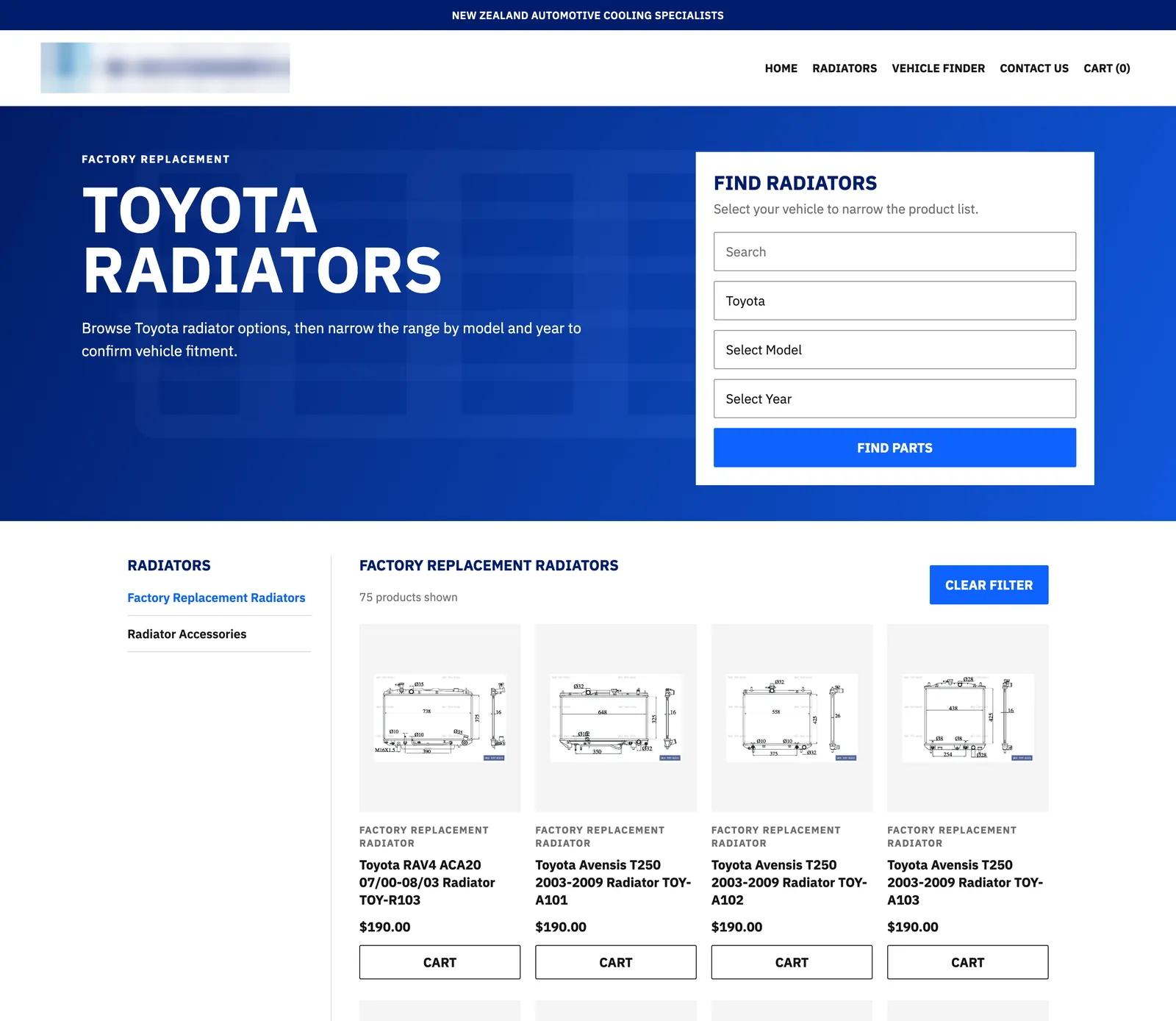
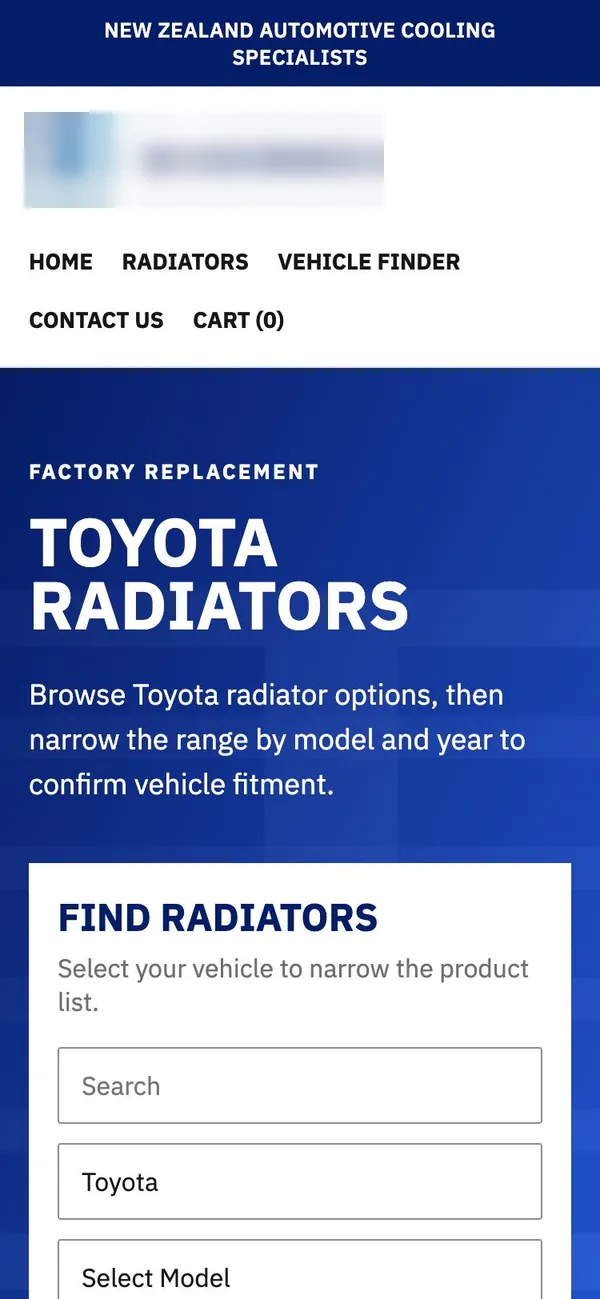
- A radiator store with a year / make / model finder and landing pages for popular radiator models.
- A second, multi-category parts store, built into the same system and ready to launch on its own domain. Each store shows only the categories assigned to it, and keeps its own orders and enquiries.
- Trade Me. Listings are published automatically and Trade Me orders are imported back into the same order list, either through Trade Me's own API or through Tradevine. Marketplace orders are protected from being counted twice against stock.
Customers can check out with a card through Stripe or by bank transfer. Freight is calculated from the delivery address, and order, payment and shipping emails go out on their own.
Built to run unattended
A system that's meant to save staff time can't need babysitting. So:
- Stock is reserved inside database transactions, so two buyers can't purchase the last part at the same time.
- The database is backed up every night and backups are kept for 30 days. Restoring one takes two typed confirmations and makes a fresh backup first.
- Background workers handle email, imports and marketplace sync, and everything restarts automatically after a server reboot.
- Around 190 automated tests cover search, imports, checkout, payments, freight, emails and admin permissions.
Update, October 2026: when the PHP2Shell vulnerabilities hit, this system was patched within two days. Read how we handled it.
The result
Because we started from how the yard actually works, the system fits the team instead of the other way round. From the moment a part comes off a car and is photographed, matching, writing, pricing and publishing all run automatically. The business now sells through its online store and Trade Me from a single back office, with a second store ready to switch on. It opened a new line of business for them without adding a single person to the team.